In the world of professional security, a patrol is only half the job. An access control check is only half the job. Even a perfectly executed emergency response is only half the job.
The other half? Writing it down. And communicating it clearly.
At Secure Guard Security Services, guards understand that if an incident was not documented, it did not happen. Reporting and communication form the fifth pillar of effective security. They are the threads that connect every other task—patrol techniques, access control, incident response, and customer service—into a coherent, accountable system.
Here is how Secure Guard turns observations into intelligence, and conversations into coordinated action.
1. The Philosophy: If It Wasn’t Written Down, It Didn’t Happen
Every security guard hears this phrase on their first day of training. It is not just a saying; it is a fundamental truth of the industry.
A guard might spot a broken lock at 2:00 AM and fix it on the spot. But if they do not log that observation, several problems arise:
- The client never knows there was a vulnerability.
- The next shift guard does not know to check that lock again.
- If an incident occurs later, there is no record of prior issues.
Secure Guard instills in every officer the understanding that documentation is protection. It protects the client by creating a historical record. It protects the guard by providing evidence of their diligence. And it protects the company by ensuring accountability at every level.
This commitment to integrity aligns with the core values highlighted on the Secure Guard website: integrity, professionalism, and an unwavering commitment to protecting people and property.
2. The Daily Log: The Backbone of Security Reporting
The most fundamental tool in a guard’s communication arsenal is the daily activity log. This is not just a notebook where guards jot down random thoughts. It is a structured record of everything that happens during a shift.
A proper daily log includes:
- Patrol Times: When each patrol round was conducted and which areas were covered.
- Observations: Anything unusual—a door left ajar, a flickering light, an unfamiliar vehicle in the parking lot.
- Incidents: Any security events, from a minor medical call to a major breach.
- Actions Taken: What the guard did in response to each observation or incident.
- Shift Handoff Notes: Critical information that needs to be passed to the next shift.
At Secure Guard, many of these logs are now managed through the Secure Track system, which digitizes the process and makes records searchable and shareable in real-time. This technology ensures that no detail is lost in a forgotten notebook.
3. Incident Reports: Capturing the Details That Matter
When something significant happens—an accident, a theft, a fire—the daily log is not enough. A formal incident report is required.
Writing a effective incident report is a skill that Secure Guard trains extensively. Officers learn to include:
- The Five Ws: Who was involved? What happened? Where did it occur? When did it happen? Why did it happen (if known)?
- Objective Facts: Reports must be factual, not opinion-based. “The subject appeared intoxicated” is an opinion. “The subject smelled of alcohol, slurred speech, and staggered while walking” is a fact.
- Chronological Order: Events should be described in the order they occurred, creating a clear narrative.
- Witness Information: Names and contact information for anyone who saw what happened.
- Actions Taken: Exactly what the guard did—called 911, administered first aid, secured the scene, etc.
These reports are often used for insurance claims, legal proceedings, and internal reviews. According to guidelines from the International Association of Professional Security Consultants , thorough documentation is a hallmark of professional security operations.
4. Radio Communication: The Lifeline of the Shift
While written reports capture the past, radio communication manages the present.
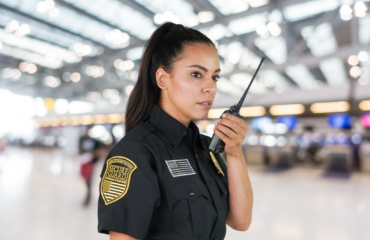
Throughout every shift, guards are in constant contact with their supervisors and fellow officers. Clear, concise radio communication is essential for coordination and safety.
Secure Guard trains officers in proper radio discipline:
- Think Before You Speak: Know what you are going to say before you key the microphone.
- Be Concise: “Unit 3 to base, I’m at the east gate and need backup” is better than “Uh, hey, this is Unit 3, I’m over by the east gate and, um, I think I might need some help out here.”
- Use Clear Language: Avoid slang or ambiguous terms. Use plain English and, when appropriate, standardized ten-codes.
- Confirm Receipt: Always acknowledge that a message was received. “Copy that, Unit 3. Backup en route.”
This level of discipline ensures that in an emergency, communication channels remain open and effective. For large events or complex sites, Secure Guard’s event security teams rely on this training to coordinate crowd management and rapid response.
5. Shift Handoffs: Passing the Torch Safely
One of the most vulnerable moments in any security operation is the shift change. When one guard leaves and another arrives, information can fall through the cracks.
Secure Guard has a formalized shift handoff procedure to prevent this:
- The Briefing: The outgoing guard briefs the incoming guard on everything that happened during the shift—incidents, observations, ongoing issues.
- The Log Review: The incoming guard reviews the written logs from the previous shift, as well as any outstanding tasks or follow-ups.
- The Walkthrough: Whenever possible, the guards conduct a joint walkthrough of critical areas, ensuring the incoming guard sees the current state of the property firsthand.
- Equipment Check: Radios, flashlights, and other equipment are checked and transferred.
This process ensures continuity of protection. A threat that was spotted at 6:00 AM does not get forgotten by the 6:00 PM shift. It remains on the radar until it is resolved.
6. Communication with Supervisors and Clients
Guards are not islands. They are part of a larger team that includes shift supervisors, account managers, and the clients themselves.
Secure Guard emphasizes upward communication—ensuring that important information reaches the right people quickly.
- Real-Time Alerts: For significant incidents, guards use the Secure Track mobile app to send instant notifications to supervisors, complete with photos and location data.
- End-of-Shift Summaries: Supervisors receive concise summaries of each shift, highlighting key events and any issues that require follow-up.
- Client Reports: Depending on the contract, clients may receive daily, weekly, or monthly reports summarizing security activity on their property. These reports turn raw data into actionable intelligence.
This commitment to transparency builds trust. As noted in a testimonial on the Secure Guard website, clients appreciate the professionalism and reliability that come from clear, consistent communication.
7. Technology: The Modern Guard’s Communication Hub
In 2026, security reporting is no longer just pen and paper. Technology has transformed how guards document and share information.
The Secure Track system is at the heart of this transformation. It allows guards to:
- Log Activities Digitally: Enter patrol data, observations, and incidents directly into a mobile device.
- Attach Photos and Videos: A picture of a broken window or a video of suspicious activity provides far more context than words alone.
- Submit Reports Instantly: No more waiting until the end of shift to file paperwork. Reports are submitted in real-time, allowing supervisors to respond immediately.
- Access Site Information: Digital maps, emergency contact lists, and post orders are always available on the guard’s device.
This integration of technology with traditional guard duties is consistent with best practices promoted by organizations like ASIS International , which advocate for leveraging technology to enhance security outcomes.
8. External Communication: The Guard as Information Hub
Guards are often the go-to source for information on a property. Visitors ask for directions. Employees ask about parking. Delivery drivers ask about loading docks.
How guards handle these interactions reflects on the entire organization. Secure Guard trains officers to be helpful and knowledgeable communicators:
- Know the Property: Guards are provided with detailed site information so they can answer questions confidently.
- Stay Professional: Even when answering the same question for the tenth time, guards maintain a pleasant and helpful demeanor.
- Escalate When Needed: If a question falls outside their knowledge, guards know exactly who to contact for the answer.
This customer service orientation is a key differentiator for Secure Guard, especially in residential security services and corporate security posts.
9. The Training: Building Strong Communicators
Great communication does not happen by accident. It is the result of deliberate training and practice.
Secure Guard invests heavily in teaching officers how to communicate effectively. Training covers:
- Report Writing: Grammar, clarity, objectivity, and completeness.
- Radio Protocols: Proper terminology, brevity, and etiquette.
- Verbal De-escalation: How to use words to calm tense situations.
- Interpersonal Skills: Active listening, empathy, and professionalism.
Resources like the Conflict Resolution Network provide valuable techniques that are incorporated into Secure Guard’s ongoing professional development programs. This ensures that every guard, whether working construction site security or close protection , represents the company with skill and confidence.
The Secure Guard Difference: Clarity Creates Safety
At Secure Guard Security Services, the company understands that what gets measured gets managed. And what gets reported gets addressed.
For over 20 years, Secure Guard has built a reputation for professionalism, reliability, and ethical conduct. A key part of that reputation is the ability to communicate clearly—with each other, with clients, and with the public.
Whether through detailed incident reports, crisp radio communication, or a friendly word of direction, Secure Guard officers ensure that information flows freely and accurately. Because in security, information is not just power. It is protection.
Ready to enhance the safety of your property? Discover how Secure Guard’s commitment to clear communication and thorough reporting can give you peace of mind.
Contact Secure Guard today for a consultation. They will listen to your needs, assess your property, and design a security solution that keeps you informed and protected.