Hospitals are unlike any other facility. They operate 24/7/365. They are open to the public by design. They house vulnerable patients, valuable medical equipment, and controlled substances. They are places of healing—but also places of stress, emotion, and sometimes conflict.
Protecting a hospital requires more than cameras and alarm systems. It requires physical security solutions that address real-world threats: agitated visitors, unauthorized access to restricted areas, infant abduction risks, workplace violence, theft of drugs and equipment, and emergency department disturbances.
At Secure Guard Security Services, we’ve spent 20 years protecting California facilities, including hospitals, clinics, and healthcare campuses. We understand that healthcare security demands professionals who are trained, alert, and compassionate.
Here’s what effective physical security looks like in hospitals—and why it’s essential for patient and staff safety.
The Unique Security Challenges of Hospitals
Before diving into solutions, it’s important to understand what makes hospitals different from other facilities.
Hospitals are open 24/7. Unlike offices or retail stores that close at night, hospitals never shut their doors. This means security must be maintained around the clock, every day of the year.
Hospitals are emotionally charged environments. Patients, families, and visitors are often under significant stress. Fear, grief, frustration, and sometimes substance impairment can lead to aggressive behavior.
Hospitals contain valuable targets. Controlled substances, medical equipment, electronics, and patient identities are all attractive to thieves.
Hospitals have multiple access points. Emergency departments, loading docks, staff entrances, visitor entrances, and ambulance bays all require monitoring.
Hospitals must comply with regulations. The Centers for Medicare & Medicaid Services (CMS) and The Joint Commission have specific requirements for healthcare facility security.
According to the Occupational Safety and Health Administration (OSHA), healthcare workers face some of the highest rates of workplace violence of any industry—yet many hospitals remain underprotected.
What Physical Security Solutions Include
Physical security for hospitals encompasses multiple layers of protection, working together.
Professional Security Guards
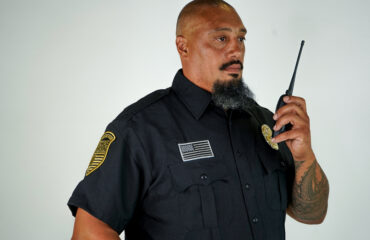
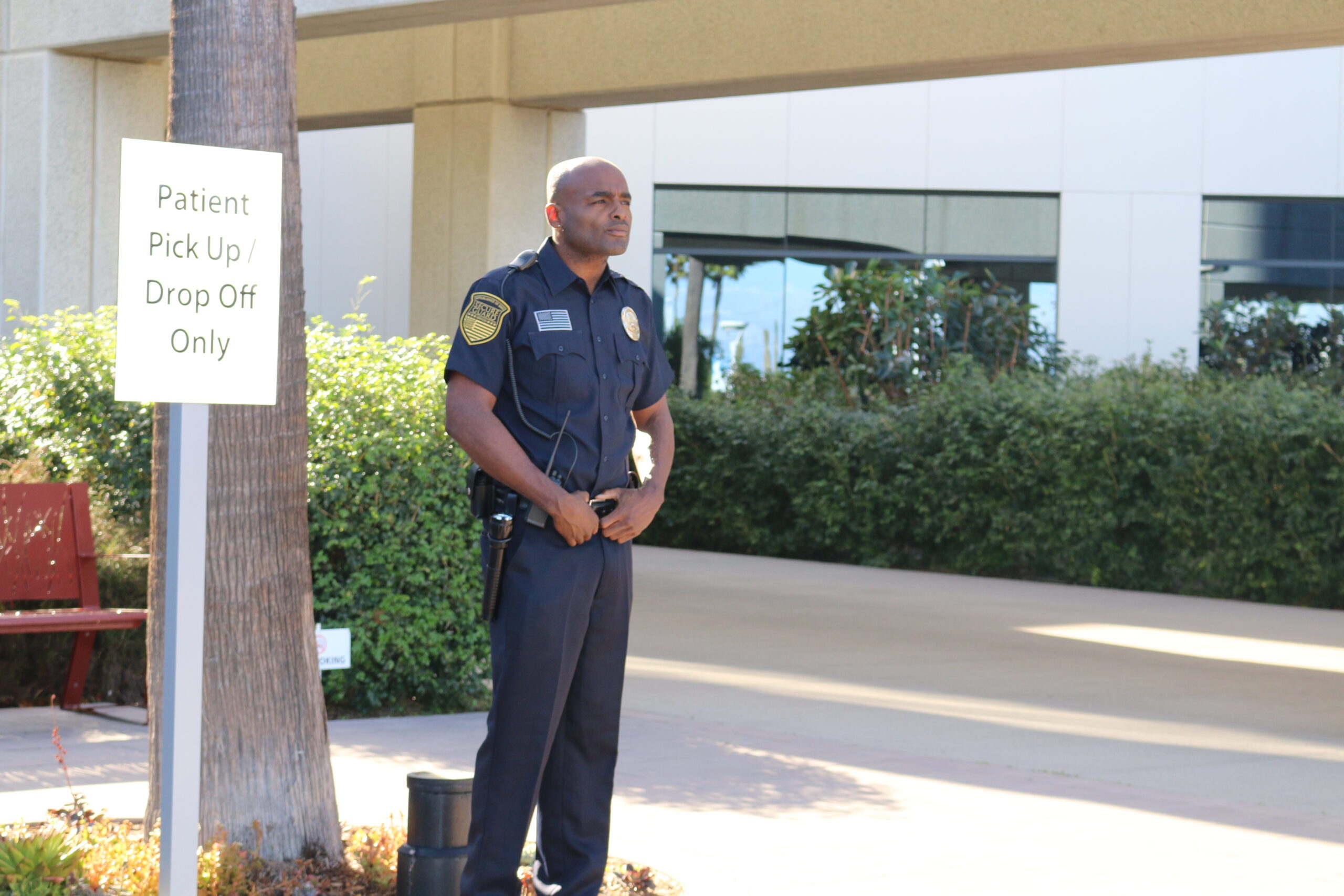
The most visible and essential component of hospital security is the uniformed guard. Guards provide deterrence, observation, and response.
Where hospital security guards are stationed:
- Emergency department entrances: Screening visitors, managing crowds, and de-escalating conflicts
- Lobby and main entrances: Checking visitor credentials, providing directions, and maintaining a visible presence
- Behavioral health units: Protecting staff and patients in high-risk areas
- Labor and delivery units: Preventing infant abduction and unauthorized access
- Parking structures: Patrolling for vehicle break-ins, theft, and personal safety
- Loading docks: Monitoring deliveries and vendor access
What hospital security guards do:
- Control access to restricted areas
- Respond to disturbances and emergencies
- De-escalate conflicts with patients, families, or visitors
- Provide safety escorts to parking areas
- Monitor security cameras and alarm systems
- Document incidents for legal and regulatory purposes
Learn more in our post on security teams during emergencies.
Access Control Systems
Hospitals have hundreds of doors and thousands of employees, contractors, and volunteers. Access control systems ensure that only authorized personnel enter restricted areas.
Key access control features for hospitals:
- Card readers at entry points to patient care areas, pharmacies, laboratories, and data centers
- Biometric scanners for high-security areas like medication storage
- Visitor management systems logging everyone who enters the facility
- Infant abduction prevention systems with tamper-proof tags on newborns
For more on this, see our post on security guard access control.
Surveillance Cameras
Modern hospital surveillance systems provide real-time monitoring of public areas, parking facilities, and high-risk zones.
Strategic camera placement:
- Emergency department waiting areas to monitor for disturbances
- Parking garages and lots to deter theft and document incidents
- Hallways and common areas to track movement and identify suspicious behavior
- Loading docks and supply areas to prevent theft
- Pharmacy and medication storage to monitor access
According to ASIS International, integrated surveillance and access control systems dramatically reduce unauthorized entry and theft in healthcare facilities.
Visitor and Vendor Management
Hospitals see thousands of visitors, vendors, and contractors daily. Managing who enters is essential.
Best practices include:
- Requiring visitor check-in and badge issuance at all entrances
- Limiting visiting hours for non-emergency areas
- Maintaining logs of after-hours access
- Verifying credentials for vendors and contractors
- Escorting unauthorized individuals off the premises
Emergency Response Protocols
Hospitals must be prepared for internal and external emergencies—from active threats to natural disasters.
Emergency response components:
- Code silver (active shooter) protocols: Lockdown procedures, law enforcement coordination
- Code red (fire) protocols: Evacuation plans, fire extinguisher access
- Code blue (medical emergency) protocols: Rapid response teams
- External disaster response: Coordinating with first responders for mass casualty events
- Infant abduction drills: Practicing response to missing infant alerts
The Security Guard’s Critical Role in Hospital Safety
While technology is essential, professional security guards are the heart of hospital physical security.
Emergency Department Security
The emergency department (ED) is often the most volatile area of any hospital. Patients under the influence, psychiatric crises, angry family members, and long wait times create a high-risk environment.
How guards protect the ED:
- Screening visitors at entry to prevent weapons or unwanted individuals from entering
- Monitoring waiting areas for escalating conflicts
- Responding to staff assist alerts when clinicians feel threatened
- Controlling access to treatment areas
- Coordinating with law enforcement when patients are in custody or need transport
Behavioral Health Unit Security
Behavioral health units treat patients in psychiatric crisis. These units require specialized security approaches.
How guards protect behavioral health units:
- Controlled access to unit entrances and exits
- Patient observation to prevent self-harm or harm to others
- De-escalation of agitated patients using trained verbal techniques
- Staff support during patient restraints or interventions
Protecting Staff on Patient Floors
According to the American Nurses Association, workplace violence against healthcare workers has reached crisis levels. Physical security protects staff.
How guards protect patient floors:
- Responding to panic alarms activated by staff
- Removing unauthorized or threatening visitors
- Patrolling parking areas during shift changes
- Providing safety escorts for staff walking to their cars after dark
Infant and Pediatric Security
Infant abduction is a rare but devastating event. Hospitals have specialized protocols to prevent it.
How guards protect infants:
- Monitoring labor and delivery unit access
- Responding to tamper-proof infant tag alarms
- Verifying identity of anyone removing an infant from the unit
- Conducting regular security checks of pediatric areas
Pharmacy and Controlled Substance Security
Hospital pharmacies contain valuable controlled substances that are targets for theft by both outsiders and employees.
How guards protect pharmacies:
- Controlling access to pharmacy and medication storage areas
- Monitoring surveillance feeds of medication dispensing
- Responding to after-hours alarms
- Investigating reports of missing medications
The Cost of Inadequate Hospital Security
When hospital security fails, the consequences are severe.
Direct costs:
- Theft of controlled substances or expensive equipment
- Liability claims from patient or staff injuries
- Regulatory fines for non-compliance
- Increased workers’ compensation premiums
Indirect costs:
- Staff turnover when employees don’t feel safe
- Reputation damage affecting patient choice
- Regulatory scrutiny and potential loss of accreditation
- Morale decline affecting patient care quality
According to The Joint Commission, hospitals that invest in comprehensive physical security report fewer incidents, lower staff turnover, and better patient outcomes than those with minimal security.
What to Look for in a Hospital Security Provider
Not all security companies are equipped for healthcare environments. Here’s what hospitals should look for.
Healthcare-Specific Training
General security training isn’t enough. Hospital security guards need training in:
- Patient privacy (HIPAA compliance)
- De-escalation techniques for behavioral health settings
- Infant abduction prevention protocols
- Emergency response coordination with clinical staff
- Cultural competency and trauma-informed approaches
Licensing and Compliance
California requires all security guards to hold valid licenses from the Bureau of Security and Investigative Services (BSIS). Verify that any provider’s guards are properly licensed and that the company maintains appropriate liability insurance.
24/7 Availability and Reliability
Hospitals never close. Security must be available around the clock, with reliable shift coverage and backup for call-offs or emergencies.
Technology Integration
Effective hospital security integrates guards with technology—CCTV, access control, infant tag systems, panic alarms. Guards should be proficient with these tools.
Our Secure Track system enables real-time incident reporting, patrol verification, and transparent communication between guards, supervisors, and hospital management.
Crisis Response Experience
Hospital security guards must be prepared for worst-case scenarios: active threats, mass casualty events, infant abductions, and workplace violence. Ask about training and drill experience.
The Secure Guard Difference: Healthcare Security You Can Trust
At Secure Guard Security Services, we’ve spent 20 years protecting California facilities—including hospitals, clinics, and healthcare campuses across the state. Our approach is tailored to the unique demands of healthcare environments.
What sets us apart:
- Healthcare-specific training: Guards receive training in de-escalation, patient privacy, infant abduction prevention, and emergency response coordination.
- BSIS compliance: All guards are properly licensed, trained, and insured.
- 24/7 reliability: Hospitals never close, and neither does our commitment.
- Technology integration: Secure Track provides real-time reporting and patrol verification.
- Crisis experience: Our guards are trained for active threats, behavioral health incidents, and medical emergencies.
Whether you need armed and unarmed security, mobile patrol, or event security for hospital gatherings, we bring the same professionalism to every shift.
Your Next Steps: Protecting Your Healthcare Facility
Hospitals are essential community assets. They deserve physical security solutions that match their importance—protecting patients, staff, and the healing mission.
Ready to discuss your hospital’s security needs?
Secure Guard Security Services offers free, no-obligation consultations. We’ll visit your facility, understand your operations, and design a security plan tailored to your unique environment.
Partner with Secure Guard for healthcare security you can trust.
Contact Secure Guard today to schedule your consultation. Serving California hospitals with integrity, professionalism, and 24/7 reliability since 2005.